

C.8 · 01 interior blinds
Magnetic blinds: a no-drill way to control light, and where they fall short
Magnetic blinds fix to steel frames and doors without a drill, which makes them a tidy answer for glare and privacy on rentals, splashback windows and glass doors, as long as you know what they can't do about heat.
A magnetic blind holds onto your window or door with magnets instead of screws. Nothing gets drilled into the frame, the tiles or the glass. That makes it one of the neatest answers for glare and privacy on the awkward windows: rentals, the little window over the kitchen sink, glass doors and tiled bathroom reveals.
It has two limits worth knowing before you buy. A magnet needs steel to grip, and many Australian window frames aren't steel. And like any blind inside the glass, it is a glare and privacy tool first. It is not a heat shield.
The timing matters too. NSW daylight saving runs from 4 October 2026 to 4 April 2027, so the strong, low sun that arrived around dinner in winter lands an hour later on the clock. Rooms that were fine at 6pm in winter can end up squinting at the TV.
What a magnetic blind actually does
How we worked this out: general knowledge of how a magnetic blind grips a steel frame compared with a bracket screwed into a reveal. Schematic, not to scale. No external source.
The idea is simple. Instead of brackets screwed into the reveal (the recess around the window), the blind sits on the face of the frame or door. Magnets along its rails hold it in place.
That brings three practical differences:
- No holes. The reveal, tiles and paintwork stay as they were. Take the blind off and there is nothing to patch.
- It moves with the door or sash. Because the blind sits on the moving part, it swings with a glass door or an opening window instead of getting in the way.
- It sits close to the glass. That keeps it slim and tidy. Depending on the design, though, a thin line of light can show at the edges. That's fine for glare and privacy, and less suited to a room you want properly dark.
No drill blinds: where magnetic fixing earns its place
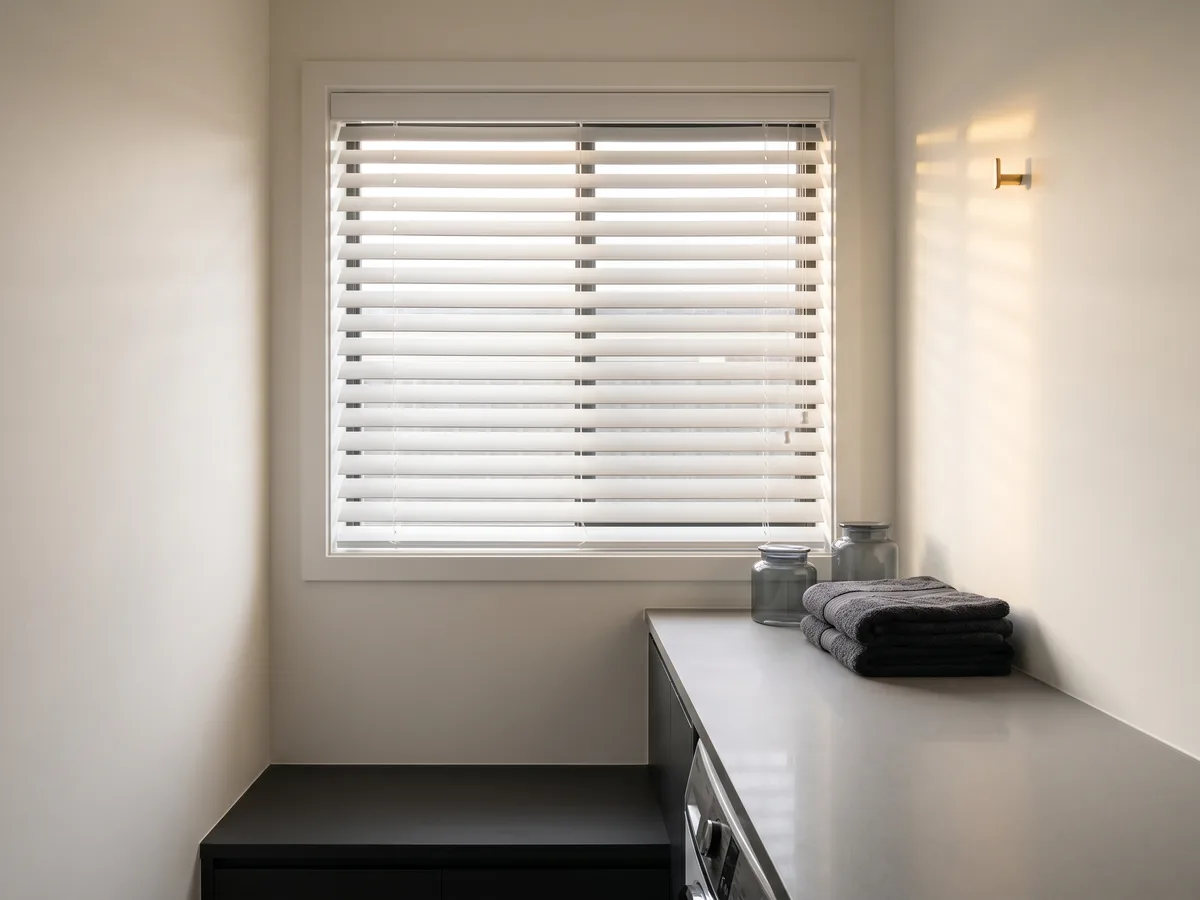
The case for a magnetic blind is strongest wherever a drill is the problem.
| The window or door | Why drilling is a problem | Why a magnetic fix suits it |
|---|---|---|
| Rental window | Drilling may need the owner's permission, and the holes stay behind after you go. | Nothing is fixed into the building, so the blind leaves with you and the frame is as you found it. |
| Window over a tiled splashback | Tiles crack when they are drilled, and every hole near a sink is somewhere water can get in. | The blind sits on the window frame itself and never touches the tiles. |
| Glass or steel door | There is often no reveal to fix into, and the blind needs to move with the door. | Magnets hold it on the door face, so it travels with the door every time it opens. |
| Tiled bathroom reveal | The same tile and moisture risk as the splashback, in a room that stays damp longer. | No fixings in the tile, and nothing screwed into a wet reveal. |
| Tilt or opening sash | A reveal-mounted blind gets in the way as soon as the sash swings or tilts open. | Fixed to the sash, the blind opens with it and stays clear of the frame. |
The kitchen splashback window is the classic example. A bracket there means drilling tiles, which can crack, and every hole near a sink is somewhere water can get in. A blind on the window frame itself avoids the tiles altogether.
Glass and steel doors are the other big one. There is often no reveal to fix into. And a blind that doesn't travel with the door is a blind you'll be fighting every time you open it.
If you rent, magnetic fixing is attractive for the obvious reason: no holes to explain at the final inspection. Still, check your lease and ask your agent before you fix anything to the frame, adhesive strips included.
Will a magnet hold on your frame? The two-minute check
This is the step most people skip, and it decides everything. Grab a fridge magnet and hold it against the frame where the blind would sit.
If it grips firmly, you likely have a steel frame or door, and a magnetic blind is a straightforward option.
If it slides straight off, the frame is probably aluminium, timber or uPVC. Aluminium frames are very common in Australian homes, and aluminium isn't magnetic. That doesn't rule magnetic blinds out, because some systems add a steel strip to give the magnets something to hold. It does mean a different conversation about what goes on the frame and how it comes off later.
Test all four sides. Some doors and windows mix materials, and a magnet that grips the top rail may not grip the sides.
Why the window is where light and heat get in
How we worked this out: the Australian Government's Your Home guide, Passive design: Glazing (yourhome.gov.au/passive-design/glazing), and energy.gov.au, Windows (energy.gov.au/households/windows). Bars plot the figures exactly as each source states them.
Windows are the weak point of most homes. The federal Your Home guide puts it plainly: up to 40% of a home's heating energy can be lost and up to 87% of its heat gained through windows. The government's energy.gov.au site gives a similar picture: almost 90% of a home's heat is gained, and up to 40% of heating energy is lost through its windows.
Those figures describe windows in general. They are not a measure of what any blind does. We couldn't find a government figure for how much heat or glare a magnetic blind stops, so we won't quote one.
What the figures do tell you is where to focus. If a room is too bright, too hot or too exposed, the window is the place to act.
What a magnetic blind can and can't do about heat
How we worked this out: the Australian Government's Your Home guide, Passive design: Glazing (yourhome.gov.au/passive-design/glazing). Schematic, not to scale, and no percentages are implied by it.
Here is the honest part. A magnetic blind sits inside the glass. By the time the sun reaches it, the heat is already in the room.
The Your Home guide says internal blinds are much less effective than preventing the solar heat from entering in the first place. Stopping the sun before it hits the glass means shading outside.
So match the tool to the job:
- Glare on a screen, privacy from the street, softer light over the sink: a magnetic blind handles these well.
- A west-facing room that bakes every summer afternoon: start with outside shade. Our guide to stopping Hunter heat before the glass covers the options. An inside blind can still take the edge off the glare.
Plenty of homes use both. The awning stops the heat, and the blind inside handles privacy at night.
Glare once the clocks go forward
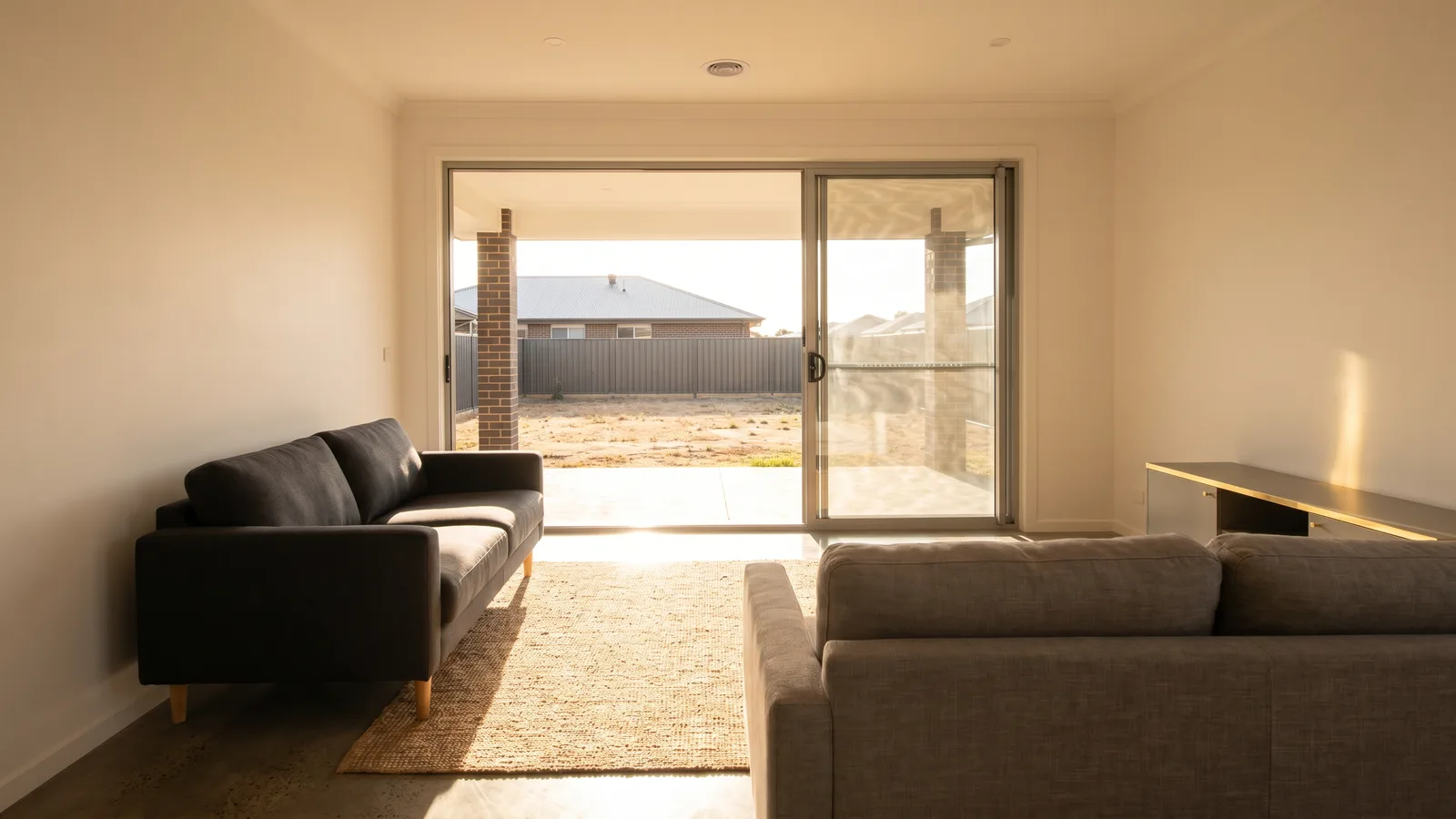
The sun hasn't changed with daylight saving. The clock has. With clocks an hour ahead from 4 October 2026, the late, low sun falls across evening routines: cooking, homework, the TV.
Walk around at the time you actually use each room and note three things:
- Which way the window faces. West windows get the lowest, harshest late sun. North windows get long, steady light through the day.
- What the sun lands on. A screen, a desk, a bed or a dining table each need a different amount of dimming.
- How dark you want it. Glare control and full blockout are different jobs. Our guide to blockout, light-filtering and sheer fabrics explains which fabric does which.
A glass door beside a west window is a good candidate for a magnetic blind. It's often the source of glare and the hardest spot to fit anything else.
No cords to loop: the safety side
"At least 21 young children have died since 2001" from unsecured blind or curtain cords.
Most magnetic blinds are cordless. That matters, because looped cords are the hazard Australia's consumer regulators keep warning about.
Consumer Affairs Victoria says unsecured blind or curtain cords claim the lives of one or two Australian children every year, and that at least 21 young children have died since 2001. WA Consumer Protection warns that looped cords and chains from blinds and curtains are a serious safety risk for children.
In NSW, there are mandatory safety requirements for blinds and curtains. NSW Fair Trading says a loose cord must not be able to form a loop 220 mm or longer at or below 1,600 mm above the floor, and cleats must sit at least 1,600 mm up.
If you're keeping corded blinds elsewhere in the house, Consumer Affairs Victoria offers Victorian households a free cord safety kit with a device that tensions looped cords to the window frame. For a wider look at safer choices, see our guide to child-safe window coverings.
Cordless designs avoid the looped cord altogether. Whether a particular product meets the rules is still something to confirm for that product.
Before you choose a magnetic blind
Do the magnet test. Note which way the window faces and when the glare hits. Then decide whether the room needs glare and privacy control inside the glass, shade outside it, or both.
With those answered, you'll know whether a magnetic blind is the right call for that window. We don't supply magnetic blinds. If the window can take a bracket, tell us the frame type, which way it faces and what's bothering you about it, and the free measure will cover the made-to-measure options that suit that spot.
Sources
- https://www.nsw.gov.au/about-nsw/daylight-saving
- https://www.yourhome.gov.au/passive-design/glazing
- https://www.energy.gov.au/households/windows
- https://www.consumer.vic.gov.au/consumers-and-businesses/products-and-services/product-safety/curtain-and-blind-cord-safety
- https://www.consumerprotection.wa.gov.au/blind-and-curtain-cord-safety
- https://www.nsw.gov.au/legal-and-justice/consumer-rights-and-protection/safety/other-consumer-products/blind-and-curtain-safety
Free measure & quote
One visit. Every opening. A written quote.
Send an enquiry and we will arrange your free measure, inside and out, with a recommendation per opening and no obligation.