

01 · Interior blinds
Interior blinds for Maitland and the Hunter
The workhorse category: rollers for most rooms, honeycombs where the temperature matters, venetians where the steam lives, verticals for the wide spans. Every blind made to the opening's numbers and picked for the opening's job.
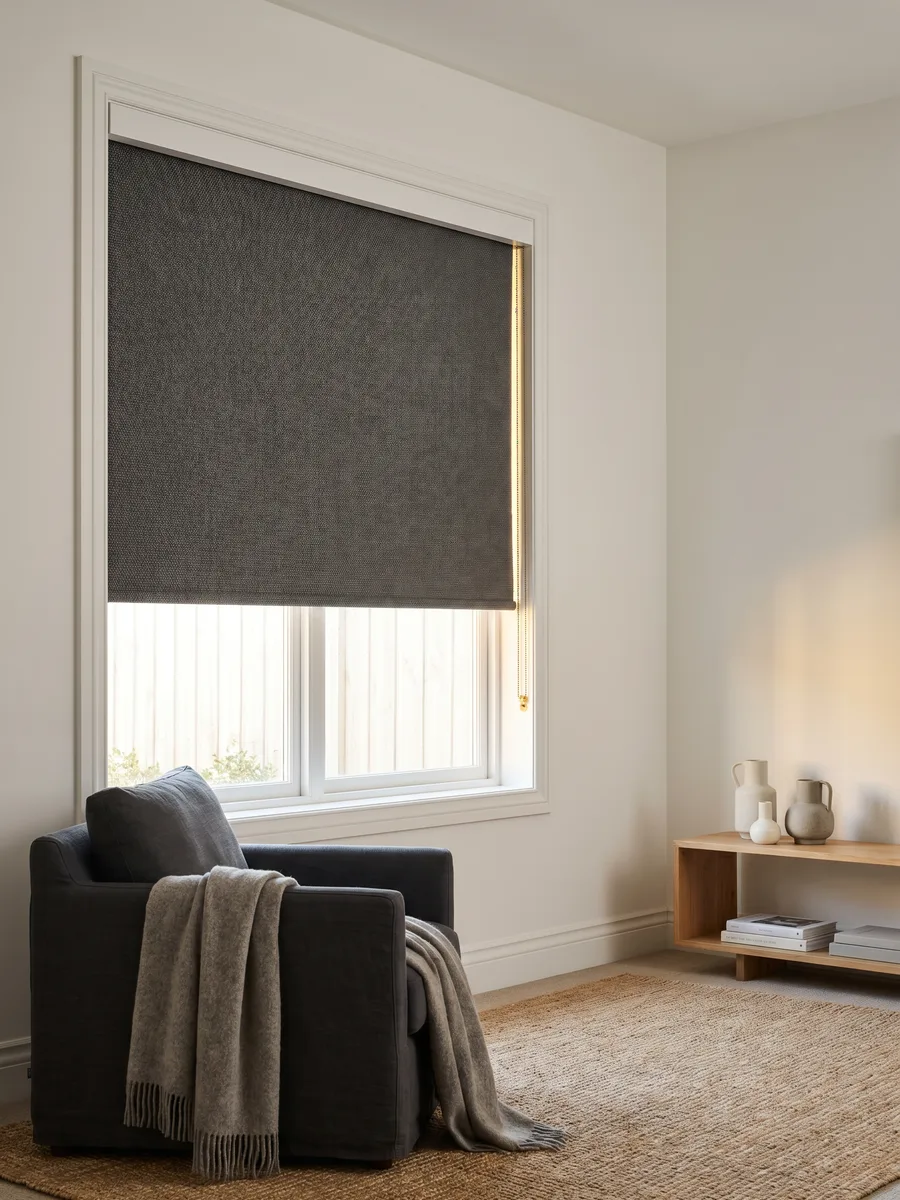
01.A The styles
Seven ways to cover a window from the inside.
Each style earns its place on a schedule for a different reason. The table below is the plain version of the conversation we have at your window; the measure visit settles fabric, colour and fit against the actual opening.
Every style comes in the three fabric transparencies where it makes sense: blockout, light-filter or sheer. That decision cross-cuts everything, so it gets its own guide.
| Style | What it is | Where it earns its place |
|---|---|---|
| Roller | A single fabric roll on a tube; the trade's original Holland blind. Optional cassette for a clean head. | The default for most rooms. Simple, durable, tidy, and available in every transparency. |
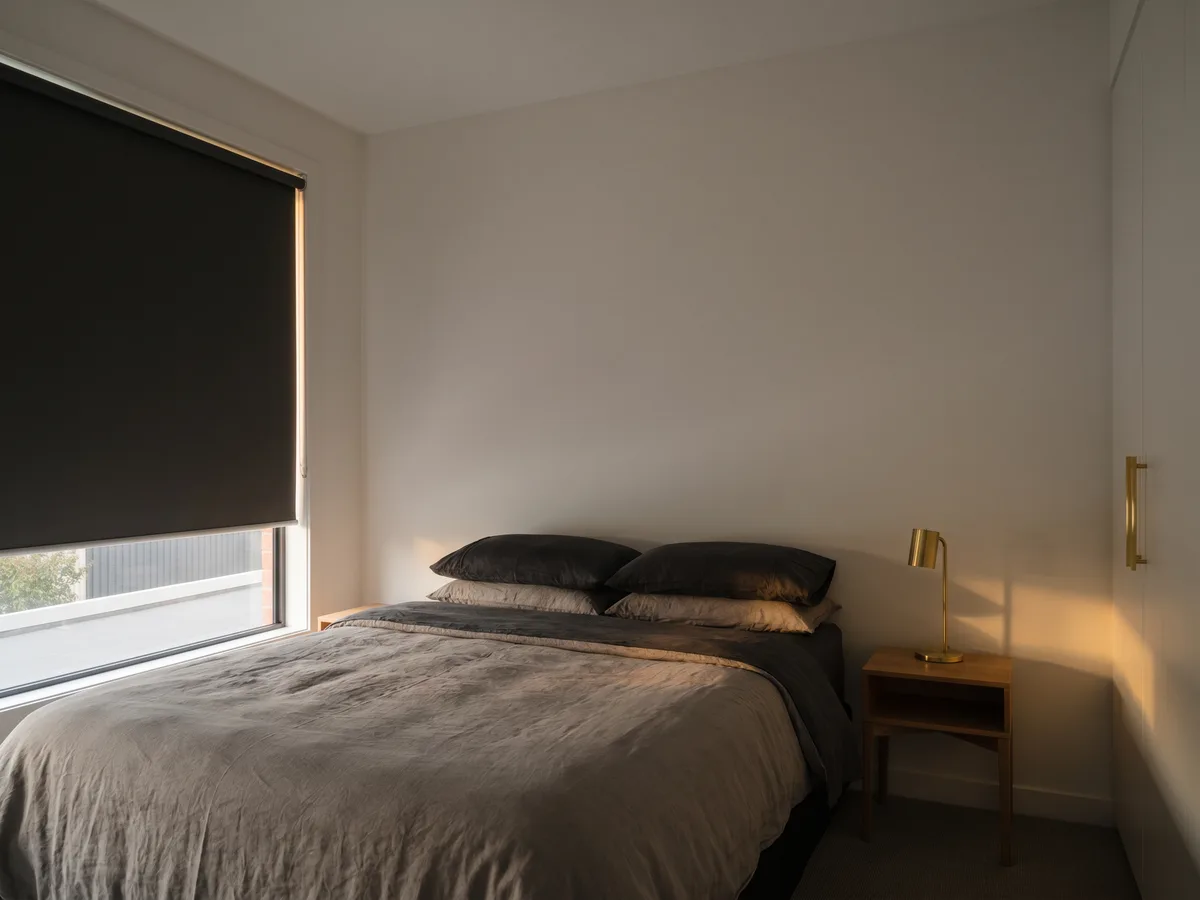
| Dual roller | Two rollers on one bracket: usually sunscreen in front, blockout behind. | Bedrooms and media rooms that need daytime light and night darkness from one opening. |
| Honeycomb | Cellular fabric that traps air against the glass; single or double cell. | Rooms that run hot in a Hunter summer or cold on a clear winter morning. The insulation is genuine: still air is the barrier. |
| Venetian | Horizontal slats, tilted for fine control. Timber, timber-look PVC or aluminium. | Kitchens, laundries and bathrooms take PVC or aluminium; timber warms a living room or study. |
| Roman | Soft fabric folding into wide pleats as it lifts. | Rooms wanting a curtain's softness with a blind's footprint. Not for wet areas. |
| Vertical | Rotating fabric or PVC louvres on a top track, stacking aside. | Sliding doors and wide spans where horizontal blinds sag. Walk-through stays easy. |
| Zebra | Alternating sheer and opaque bands; rolling aligns them for stepless control. | A modern alternative to the dual roller where one fabric should do both jobs. |
01.B Operation
Chain, cordless or motorised.
Corded and chain operation is standard and low-cost, and we install it to the mandatory Australian child-safety standard: no reachable loops, a cleat or guide fitted high, and the installer's label attached. In homes with young children, cordless or motorised operation removes the question entirely, and it is what we usually suggest for nurseries and kids' rooms.
Motorised blinds run on rechargeable battery motors, or hardwired power where a licensed electrician does the connection. Worth the upgrade on high windows, banks of three or more, and anywhere a remote beats a reach.
The child-safety standard, explained plainly
And the honest line on blinds you already have: we don't repair or re-cord them, so for a blind that won't hold, a frayed cord or a chain that slips, ask whoever fitted it. If it's past saving, its replacement goes on the same schedule as everything else, measured at the free visit.
01.C The fit
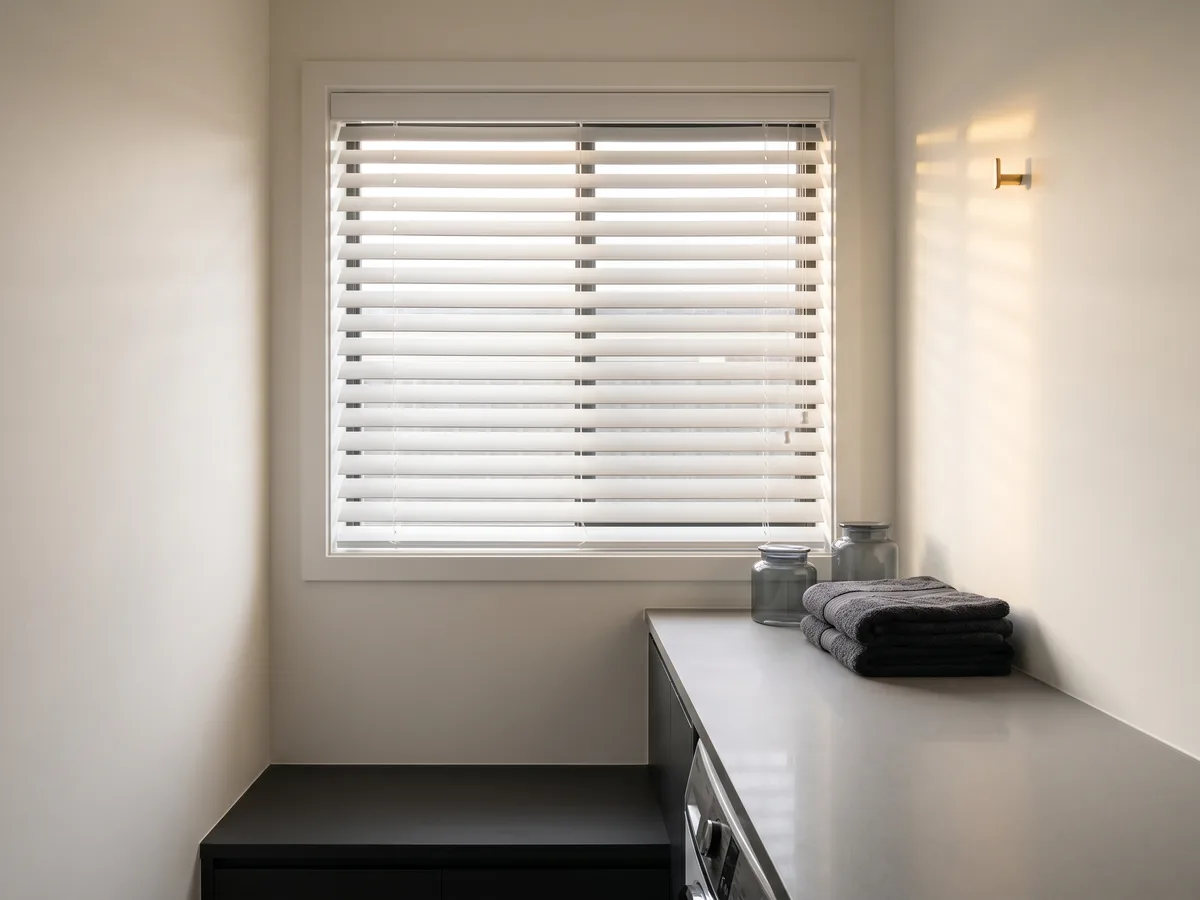
Reveal fit or face fit, decided at the tape.
Inside the recess for the clean, built-in look, or on the face of the wall for wider coverage and better edge darkness. It depends on the depth of your reveal, the handles in the way, and the job the room gave the blind, which is why we decide it at the measure, not from a photo.
Reveal fit or face fit, the plain guide
Free measure & quote
One visit. Every opening. A written quote.
Send an enquiry and we will arrange your free measure, inside and out, with a recommendation per opening and no obligation.