

C.9 · The whole house
Blinds in Maitland: choosing for Hunter heat, older homes and children
Maitland windows have three jobs to get right. They have to keep out a hot summer, suit the house they sit on, and stay safe for children. The short answer from Essential Blinds: shade east and west glass from the outside with something you can adjust, and line and close-fit whatever hangs inside. Ask Council before you change the outside of a heritage home, and make sure every corded blind meets the national cord safety standards. The detail and the numbers behind it follow.
What Maitland's summer asks of a window covering
How we worked this out: Bureau of Meteorology, Maitland Airport daily weather observations for January 2026 (bom.gov.au/climate/dwo/202601/html/IDCJDW2079.202601.shtml), and climate statistics for Maitland Visitors Centre (bom.gov.au/climate/averages/tables/cw_061388.shtml). Bars plot the figures as the Bureau states them.
Heat comes first. The Bureau of Meteorology's January 2026 daily observations for Maitland Airport put the mean daily maximum at 30.5°C and the hottest day at 40.3°C. On the same Bureau page, four days reached 39°C or more: the 8th, 9th, 10th and 25th.
That was not an odd month out. The Bureau's long-term averages for Maitland Visitors Centre put January's mean maximum at 30.2°C and July's at 18.0°C. They also show 821.3 mm of rain a year and 3pm humidity of 48 to 61%. Those are averages to 2016, when that station closed.
The season ahead points the same way. The Bureau's long-range outlook, issued 8 October 2026, gives parts of eastern New South Wales an over 80% chance of unusually high maximum temperatures from November to January.
Glass is where most of that heat gets in. According to energy.gov.au, windows can account for almost 90% of a home's heat gain and up to 40% of heating energy loss.
Maitland's winters are mild, so the same window that needs shutting out in January is worth opening to the sun in July. That is why adjustable coverings earn their keep here. If you live in East Maitland, Ashtonfield or Metford, start with the windows that take the afternoon sun.
Which Maitland windows need external blinds, and which need awnings
How we worked this out: the Australian Government's Your Home guide, Passive design: Shading (yourhome.gov.au/passive-design/shading). Schematic, not to scale; the sun paths show direction and relative height only.
It depends on which way the glass faces.
North-facing windows are the easy ones. Your Home, the Australian Government's guide to sustainable homes, says north glass is the simplest to shade, with eaves or awnings. Fixed horizontal shading on that side keeps out the high summer sun and still lets the lower winter sun in.
East and west windows are harder, because the sun comes in low. For those, Your Home calls adjustable vertical shading such as external blinds "the optimum solution". An eave does little against late sun that arrives nearly side-on. A blind you can drop at 3pm does a lot.
Skylights and roof glazing need the most help. Your Home says they should have external blinds or louvres. Roof glazing receives almost twice the heat of an unprotected west-facing window of the same area.
Your Home puts the upper limit for effective shading at up to 90% of the sun's heat. Read that as the best case for well-designed shading, not a figure any single blind can claim.
To compare the options, see our guide to heat control inside or outside the glass and the awnings and outdoor blinds range. If you're weighing the two for an alfresco, our earlier piece on outdoor blinds or awnings goes into that choice.
Anything fixed outside also has to ride out storm season. The NSW SES counts that season as September to April and advises securing or putting away items that could blow around in strong winds.
Inside the glass: what makes a blind or curtain hold heat back
What to look for in an inside covering
Inside coverings still matter, especially on windows you can't shade from outside. energy.gov.au says close-fitting lined curtains or blinds and pelmets help all year. Look for coverings that:
- reach the floor
- wrap to the wall either side
- have a light-coloured block-out backing
- use tightly woven fabric.
A gap at the side or top lets air move past the glass. The fit is doing as much work as the fabric.
How we worked this out: energy.gov.au, Windows (energy.gov.au/households/windows). The bars show the order of the day, not clock times: when the sun leaves a window depends on which way it faces.
How you use them counts too. energy.gov.au recommends closing coverings during the day in warmer months, then opening them at sunset for the evening breeze. In cooler months, do the reverse: open them in the day to let the sun in, and close them when the sun leaves the window.
Not every room wants the same fabric. A bedroom facing the morning sun may want full block-out, while a living room may want light without glare. Our guide to blockout, light-filter or sheer fabrics runs through the trade-offs. The options themselves sit in the interior blinds, shutters and curtains ranges.
New estates and bare glass: where a whole-house fit-out starts
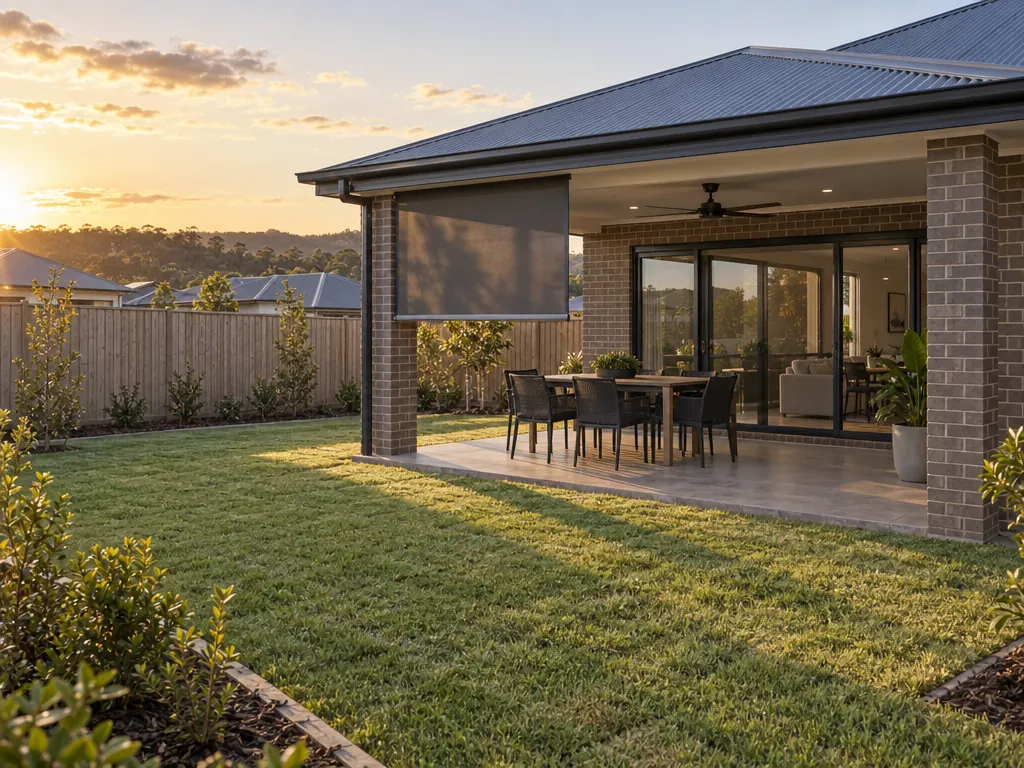
A new house usually arrives with every window bare at once, and the first summer shows which ones matter. Use the sun to set the order:
- West-facing glass and the alfresco first, because low afternoon sun is the hardest to shade.
- East-facing bedrooms next, for early light.
- North windows last, since eaves often already do part of the job.
Our guide on how to schedule a whole house of window coverings walks through the order. If you're building or have just moved in, there is more on the local estates on the pages for Thornton, Chisholm and Gillieston Heights and Rutherford and Aberglasslyn.
Older and heritage homes: check with Maitland City Council before you fit
How we worked this out: Maitland City Council, Heritage development works (maitland.nsw.gov.au/residents/building-renovations/heritage-development-works), and the NSW Planning Portal, Exempt development (planning.nsw.gov.au/the-planning-system/development-assessment/planning-approval-pathways/exempt-development). A guide to the questions, not a ruling on any one home.
Some Maitland homes are heritage items or sit in a Heritage Conservation Area, and those carry rules. Maitland City Council says that in most circumstances, development consent is required for work on a heritage house or a property within a Heritage Conservation Area.
Smaller jobs have a lighter path, but there is still a step to take. If a proposal may count as minor works under the Maitland LEP, Council offers a Minor Works Application, for a fee, and confirms in writing whether the work can go ahead without development consent. Work must not start until that written approval is received.
Outside heritage areas, some small jobs may not need planning approval. The NSW Planning Portal's exempt development page lists "awning, blinds and canopies" as a category that may not need approval if the standards in the State planning policy are met. That page doesn't spell out the standards, so check the rules or ask Council before an awning goes up.
Blinds, shutters and curtains fitted inside are a different question from changes to the outside. On a listed home, ask Council rather than assume.
If you're not sure whether your street is in a conservation area, Council is the place to ask. It also points to a Heritage Trades Directory of tradespeople experienced with heritage work.
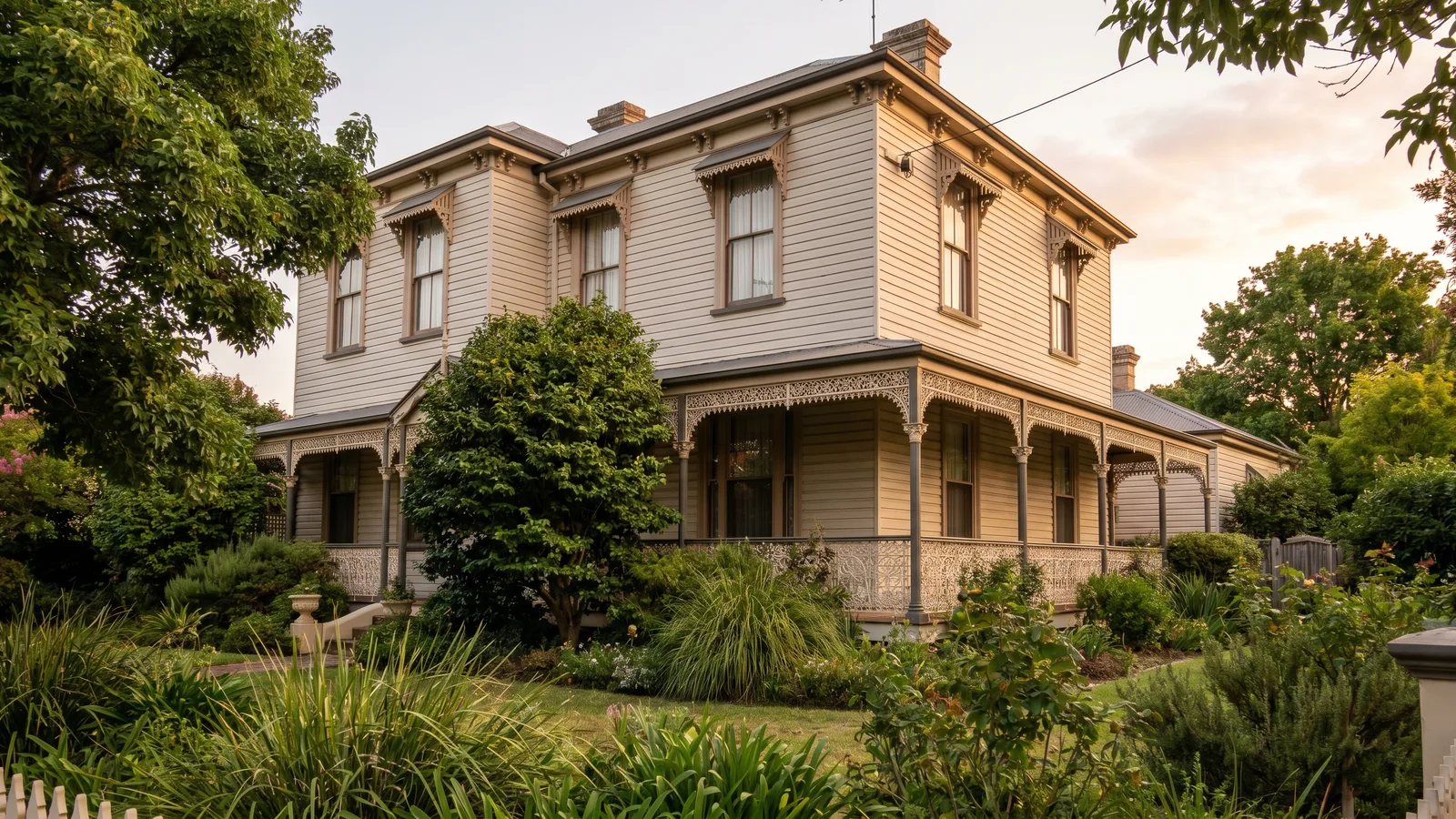
For homes around the river towns, our page on blinds and curtains in Lorn and Morpeth is a good place to start. Mention the heritage question when you book a measure, so it is on the table from the first visit.
Children at home: the national cord rules for blinds
How we worked this out: NSW Fair Trading, Blind and curtain safety (nsw.gov.au/legal-and-justice/consumer-rights-and-protection/safety/other-consumer-products/blind-and-curtain-safety). The 1,600 mm and 220 mm figures are as stated there; the rest of the drawing is schematic.
If there are children in the house, the cord rules matter more than the fabric. Two national mandatory standards apply to corded blinds and curtains, and NSW Fair Trading sets out what they require:
- A corded blind must be installed so a loose cord cannot form a loop of 220 mm or longer at or below 1,600 mm above the floor.
- A cleat for securing a cord must sit at least 1,600 mm above the floor.
- Whoever installs a corded blind must attach a label with the name and contact details of the installer or the company responsible.
- Warning labels and swing tags must not be removed.
Furniture is the other half of the risk. NSW Fair Trading says to keep cots, beds and furniture away from cords, particularly where children under six are present. A cot under a window undoes a well-placed cleat.
Cutting a cord loop is not always the fix, because some vertical blinds and curtains need a continuous loop to work and need a safety device that secures the cord out of reach instead (NSW Fair Trading). Before cutting any cord, check the blind will still work and that the warranty will still hold.
Room-by-room cord check
Our guide to child-safe window coverings covers the cordless and corded options in more depth.
The numbers in one place
- Heat
- Maitland Airport mean daily maximum, January 2026 30.5°C
- Maitland Airport highest maximum, January 2026 40.3°C
- Source: Bureau of Meteorology
- Older homes
- Heritage minor works Council confirms in writing
- Works must not start until written approval is received
- Source: Maitland City Council
- Cords
- Loose cord loop at or below 1,600 mm above floor under 220 mm
- Cord cleat minimum height 1,600 mm above floor
- Source: NSW Fair Trading
Keep three sets of figures in mind. Maitland Airport's January 2026 mean daily maximum was 30.5°C, with a high of 40.3°C (Bureau of Meteorology). On a heritage home, minor works wait for Council's written approval (Maitland City Council). Cord loops must stay under 220 mm at or below 1,600 mm, with cleats at least 1,600 mm up (NSW Fair Trading).
Your next step: have the windows measured
Window coverings are easier to choose against your actual windows than in the abstract. A measure puts the orientation, the fit and the cord questions in front of the glass they apply to.
Book a measure and quote with Essential Blinds through our enquiry page. Tell us which windows take the afternoon sun, whether the house is heritage-listed, and whether small children live there. If you'd like to browse first, the full range of blinds, shutters, awnings and curtains is a good starting point. You can also check that your suburb is on our service areas list.
Sources
- https://www.bom.gov.au/climate/dwo/202601/html/IDCJDW2079.202601.shtml
- https://www.bom.gov.au/climate/averages/tables/cw_061388.shtml
- https://www.bom.gov.au/climate/ahead/outlooks/
- https://www.yourhome.gov.au/passive-design/shading
- https://www.energy.gov.au/households/windows
- https://www.ses.nsw.gov.au/stormseason
- https://www.maitland.nsw.gov.au/residents/building-renovations/heritage-development-works
- https://www.planning.nsw.gov.au/the-planning-system/development-assessment/planning-approval-pathways/exempt-development
- https://www.nsw.gov.au/legal-and-justice/consumer-rights-and-protection/safety/other-consumer-products/blind-and-curtain-safety
Free measure & quote
One visit. Every opening. A written quote.
Send an enquiry and we will arrange your free measure, inside and out, with a recommendation per opening and no obligation.